

Lately, more and more friends have been asking: "I want to visit China — what do I actually need to prepare?" Visa-free entry has expanded and paying is far friendlier than it used to be, yet many travelers still get stuck the moment they land: the QR payment won't go through, WhatsApp suddenly stops working, or the hotel they booked says it can't accept foreign guests. This guide was put together by ShinkaRoam based on the latest 2026 policies, so first-time visitors can prepare item by item.

The numbers actually look good. In Q1 2026, more than 8.3 million foreigners entered mainland China visa-free, up nearly 30% year over year.[1] Unilateral visa-free entry covers 50 countries;[2] the 240-hour transit visa-free policy covers 60 ports and 24 provinces (regions and municipalities);[3] Alipay supports 16 languages;[4] and foreign-card POS coverage at key merchants in Beijing exceeds 98%, with key scenarios in Shanghai and Shenzhen largely filled in as well.[5][6]
Policy keeps moving forward; the information gap is still there. Below, we follow the order of an actual trip: Chinese visas and visa-free entry, Alipay / WeChat Pay, getting online with a mainland China eSIM, language and navigation, hotels, Tibet, medical care — and finally the small stuff nobody usually mentions. Plenty of tables so you can match each item against your own situation; fewer slogans, more of "what will actually happen the day you land."
1. Check your passport first: visa-free, transit, or do you need a visa?
Not every passport lets you just "buy a ticket and go." Your nationality decides your lane: some travelers land, get a stamp, and can stay 30 days; some can only use the 240-hour transit window; others have to visit an embassy in advance. Get this part straight first — the rest of the itinerary depends on it.
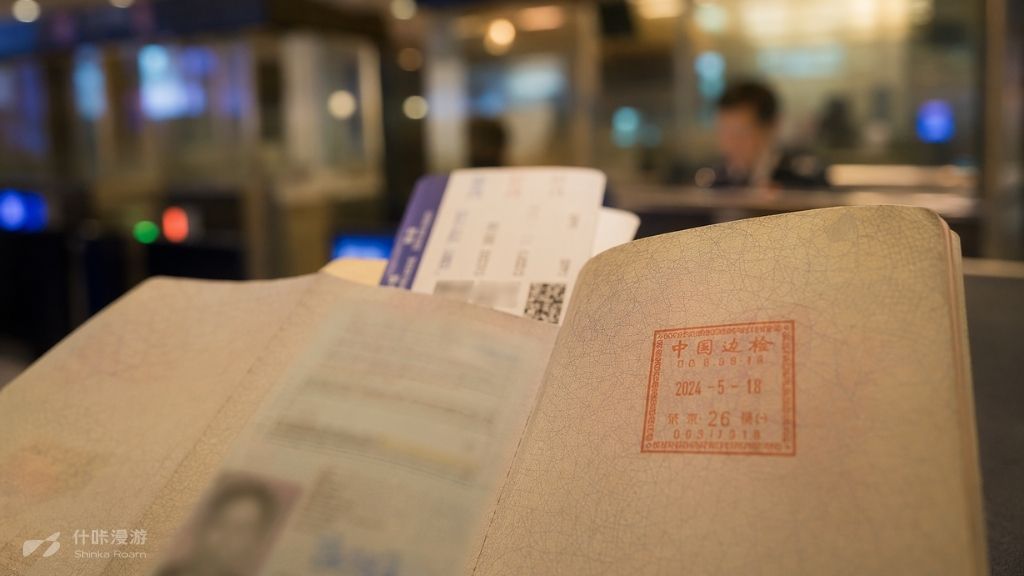
As of May 2026, there are roughly three lanes
| Policy type | Who it applies to | Length of stay | Coverage |
|---|---|---|---|
| Unilateral visa-free | Ordinary passport holders from 50 countries | 30 days | Brunei, France, Germany, Italy, Spain, Netherlands, Switzerland, Ireland, Hungary, Austria, Belgium, Luxembourg, New Zealand, Australia, Poland, Portugal, Greece, Cyprus, Slovenia, Slovakia, Norway, Finland, Denmark, Iceland, Andorra, Monaco, Liechtenstein, South Korea, Bulgaria, Romania, Croatia, Montenegro, North Macedonia, Malta, Estonia, Latvia, Japan, Brazil, Argentina, Chile, Peru, Uruguay, Saudi Arabia, Oman, Kuwait, Bahrain, Russia, Sweden, Canada, United Kingdom |
| 240-hour visa-free transit | Valid passport holders from 55 countries + onward connecting ticket | 10 days (240 hours) | Covers 24 provinces (regions/municipalities) and 65 open ports of entry; cross-province travel allowed during the stay |
| Full mutual visa exemption | 30+ countries (mutual, ordinary passports) | Usually up to 30 days | Asia: Thailand, Singapore, Malaysia, Maldives, Kazakhstan, UAE, Qatar, Armenia, Azerbaijan, Uzbekistan, Georgia; Europe: Albania, Belarus, Bosnia and Herzegovina, Serbia, San Marino; Africa: Mauritius, Seychelles, Zambia; Oceania: Fiji, Tonga, Samoa, Solomon Islands, Micronesia, Nauru; Americas: Barbados, Bahamas, Antigua and Barbuda, Dominica, Grenada, Suriname, Ecuador (note: Chinese ordinary passport holders currently still need a visa in advance for Ecuador) |
Unilateral visa-free entry is not "permanent":
- Brunei: no announced end date for now;
- Russia: valid through December 31, 2027 (extension announced on May 20, 2026);
- The other 48 countries: valid through December 31, 2026 (including Brazil, Argentina, Chile, Peru, Uruguay, Saudi Arabia, Oman, Kuwait, Bahrain, and others).
The 240-hour transit: made for "passing through and playing on the way"
Much looser than the old 72/144-hour scheme. The biggest change: you can move across provinces — within the permitted areas of 24 provinces (regions/municipalities), you're no longer stuck in your city of entry. The catch: you must genuinely be in transit, holding a connecting ticket to a third country (or region) with a confirmed date and seat.
The 55 eligible countries roughly include:
- Europe (40): Denmark, Austria, Belgium, Czech Republic, Estonia, Finland, France, Germany, Greece, Hungary, Iceland, Italy, Latvia, Lithuania, Luxembourg, Malta, Netherlands, Poland, Portugal, Slovakia, Slovenia, Spain, Sweden, Switzerland, Monaco, Russia, United Kingdom, Ireland, Cyprus, Bulgaria, Romania, Ukraine, Serbia, Croatia, Bosnia and Herzegovina, Montenegro, North Macedonia, Albania, Belarus, Norway
- Americas (6): United States, Canada, Brazil, Mexico, Argentina, Chile
- Oceania (2): Australia, New Zealand
- Asia (7): South Korea, Japan, Singapore, Brunei, UAE, Qatar, Indonesia
Ports and areas: 65 open ports of entry nationwide (airports, seaports, land crossings, and the West Kowloon high-speed rail station, among others); the permitted stay area covers 24 provinces (regions/municipalities) including Beijing, Tianjin, Hebei, Shanxi (Taiyuan, Datong), Liaoning, Heilongjiang, Shanghai, Jiangsu, Zhejiang, Anhui, Fujian, Jiangxi (Nanchang, Jingdezhen), Shandong, Henan, Hubei, Hunan, Guangdong, Guangxi (12 cities), Hainan, Chongqing, Sichuan, Guizhou, Yunnan, Shaanxi, and Gansu. The clock starts at midnight on the day after entry, for up to 240 hours.
The most common misunderstandings
The 30-day visa-free stay cannot be extended. Overstaying can mean a fine for every extra day — up to RMB 10,000 — plus a record that makes future entry harder. Transit visa-free is picky about tickets: without a genuine connecting ticket to a third country, or if the ticket date falls outside the 240-hour window, border control can refuse you on the spot. Visa-free also doesn't mean anything goes — tourism, business, family visits, and exchanges are fine; working, studying, or journalism still requires the matching visa. Also, "unilateral visa-free" and "full mutual exemption" sound alike but don't work identically; countries like Russia and South Korea may appear on both lists, yet for ordinary passport holders the practical result is the same ~30 visa-free days, so don't get hung up on terminology.
Practically, here's what I recommend: before departure, re-check on the National Immigration Administration website or the China Consular Service Network; print your return/onward ticket and hotel bookings — border officers occasionally ask about your itinerary; keep at least 6 months of passport validity. Since November 20, 2025, you can also submit arrival information in advance via the NIA website, the government services platform, the "NIA 12367" app, or WeChat/Alipay mini programs — save the QR code and you may get to use the e-channels at the port. Rules for minors are the same as for adults. If force majeure will push you past 240 hours, apply to the exit-entry administration of the public security bureau for a stay permit as required — don't just wing it.
The visa section is mainly checked against the Ministry of Foreign Affairs' "List of Mutual Visa Exemption Agreements between China and Foreign Countries" (updated May 29, 2026) and National Immigration Administration announcements. See: https://www.mfa.gov.cn/wjbzwfwpt/kzx/tzgg/202504/t20250414_11594222.html
2. Paying: don't panic when your Visa gets declined
Day-to-day spending in China revolves almost entirely around phones. Breakfast stalls, taxis, subway gates, even temple donation boxes — many people simply assume you'll scan a code. Flip side: Visa / Mastercard often don't work at small and mid-sized shops, and if you pull out a big banknote, the clerk may not have change. It's not that "China dislikes credit cards" — the country simply never grew up as a credit-card society.
The good news: since 2023, the government and the payment platforms have patched much of this chain for foreign visitors. You don't need a Chinese bank card — link your international card to Alipay or WeChat and you can pay as soon as you land.
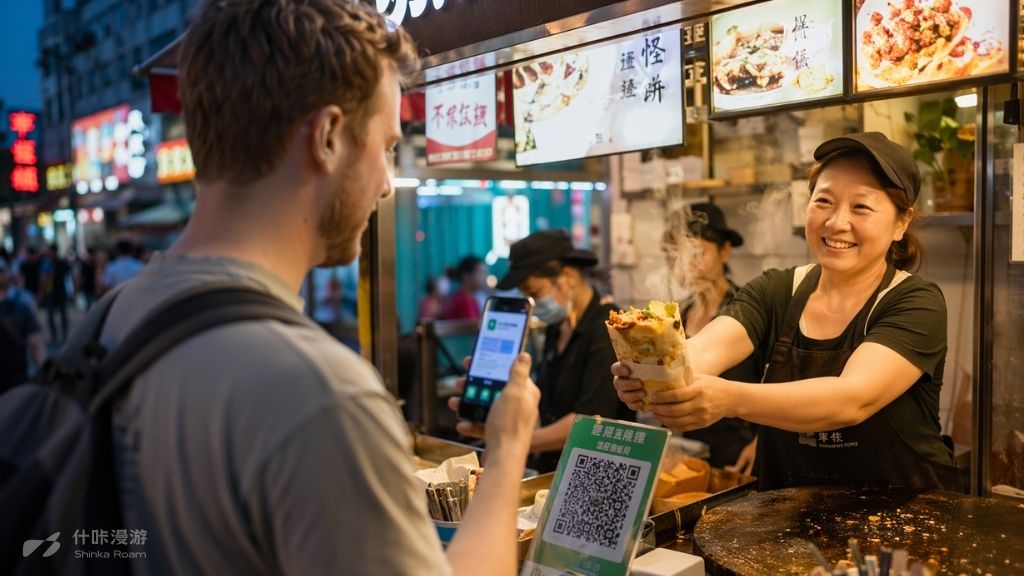
Three ways to pay — how should you combine them?
| Method | Rating | Best for | Pros & cons |
|---|---|---|---|
| A. Link Alipay / WeChat Pay | ⭐⭐⭐⭐⭐ | Everyday spending: dining, transit, supermarkets, small shops, online shopping | Widest coverage; 3% fee on larger transactions; register in advance |
| B. International credit card (POS) | ⭐⭐⭐ | Five-star hotels, large malls, airports, high-speed rail stations, some subways | No app needed; mostly unusable at night markets, taxis, and smaller merchants |
| C. Cash (RMB) | ⭐⭐⭐ | Emergencies; some small shops and traditional markets | Legally cannot be refused; in practice change is often short and some staff are used to QR-only |
The main path: link your card in Alipay / WeChat
One international credit card and one phone that can receive SMS — you can finish everything before departure. Search "Alipay" in your app store for the international version (or check the Alipay international site first); search "WeChat" for WeChat (payment setup for foreigners: WeChat Pay English guide). You can register with your home-country number — +86 isn't required. Real-name verification just needs your passport (Home Return Permits, Taiwan Compatriot Permits, residence permits, and foreign permanent-resident IDs also work). Supported card networks: Visa, Mastercard, Diners Club, Discover, JCB; American Express still can't be linked.
Fees and limits (rules are similar on both platforms):
| Item | WeChat Pay | Alipay |
|---|---|---|
| Fee | Per transaction ≤ RMB 200: free; per transaction > RMB 200: 3% | Per transaction ≤ RMB 200: free; per transaction > RMB 200: 3% |
| Per-transaction limit | RMB 6,000 | RMB 3,000 |
| Monthly limit | RMB 50,000 | RMB 50,000 |
| Annual limit | RMB 60,000 | RMB 60,000 |
| Exchange rate | Follows the card network's real-time rate | |
In person, either show your payment code for the clerk to scan, or scan the merchant's collection code; ordering food, hailing rides, and buying train tickets are also usually done inside mini programs.
Transactions of RMB 200 or less are fee-free. Milk tea and fast food — don't even think about it; only a single RMB 500 purchase triggers that 3%. Split the bill when it's easy, but don't make checkout awkward just to save a few cents.
Where cards still work
If you'd rather not install payment apps, or a single purchase hits the limit, cards are the fallback. Five-star and chain hotels, large malls (SKP, MixC, Wanda, etc.), and shops inside airports and high-speed rail stations are usually fine; some city subways also accept Visa/Mastercard tap-to-ride (Guangzhou, for example). Street stalls, night markets, most taxis, and county-town or rural merchants — don't count on it. Before paying, check the card-network logo on the POS; some terminals want a PIN, some a signature, and a few add a surcharge — asking first costs nothing.
Since 2024, the central bank and the Ministry of Culture and Tourism have pushed foreign-card acceptance upgrades in key commercial districts. In the key shopping areas of first-tier cities like Beijing, Shanghai, and Guangzhou, foreign-card POS coverage has passed 99%. The verbal strategy is simple: card for big amounts, QR for small ones, cash as backstop.
Cash: backed by law, but don't rely on it alone
The RMB is legal tender, and refusing cash is illegal. In November 2025, the People's Bank of China, the NDRC, and the financial regulator jointly issued the "Regulations on RMB Cash Acceptance and Services," effective February 1, 2026: no refusing cash, no inducing refusal, no discriminating against cash payments; violations can be fined up to RMB 50,000 and go into credit records. In reality, small shops running out of change and young clerks who only know QR codes are still common. Carrying RMB 1,000–2,000 (about $140–280) is enough for emergencies; exchange at the airport or bank branches (Bank of China, ICBC, etc.); ask for plenty of 10, 20, and 50 notes.
ATMs work, but don't make them your main plan
| Item | Details |
|---|---|
| ATM logos | Look for machines with VISA / Mastercard logos. Bank of China, ICBC, CCB, ABC, and Bank of Communications mostly support foreign-card withdrawals |
| Fees | Typically about 3% of the withdrawal, minimum ~$3 per transaction; your card issuer may add an overseas withdrawal fee |
| Limits | Commonly up to RMB 1,000 per transaction, about 2 transactions per day |
If your card carries a UnionPay logo, withdrawing cash in China is much smoother — nearly every ATM accepts it, and fees are often lower (about 1% of the amount + RMB 12 per transaction).
Don't treat "one Visa card" as bulletproof, and don't put off registering Alipay until you land — airport WiFi is flaky and SMS verification codes love to stall. ATM withdrawals are expensive with low limits, and cash being legal doesn't solve the no-change awkwardness. The stable combo is still: cards for hotels and malls, QR for daily spending, a little cash in your pocket. Staying over a month? Consider opening a local bank account with your passport plus accommodation registration — the fee and limit pressure drops a lot.
References: People's Bank of China, State Administration of Foreign Exchange, and WeChat Pay / Alipay announcements; cash rules per the "Regulations on RMB Cash Acceptance and Services" (Announcement No. 29, 2025). Platform details change — check the latest notices before departure.
3. Getting online: Gmail and WhatsApp will "suddenly vanish"
This is the single most common complaint from first-time visitors. Your phone isn't broken — mainland China restricts access to a set of overseas internet services (often called the Great Firewall). The moment you land, a chunk of your digital life goes dark.
Blocked by default, including but not limited to: the whole Google family (Search, Gmail, Maps, Drive, Photos, YouTube), Facebook / Instagram / X / international TikTok, WhatsApp / Telegram / Signal / Line, ChatGPT / Claude / Gemini, plus BBC, The New York Times, Dropbox, Notion, Slack, Discord, and more. What works normally: WeChat, Alipay, Bing, Apple Maps / iMessage / FaceTime, LinkedIn / Outlook / Teams, Booking.com, Trip.com, and Ctrip.
Why it's more annoying than just "no internet"
When Gmail dies, flight confirmations and hotel emails stop arriving, and anything you log into with a Google account breaks with it. With Maps unusable, you have to switch to Amap or Baidu — English interfaces exist, but habits take rebuilding. When WhatsApp cuts out, your family thinks you've gone missing. Without tools like ChatGPT, even reading menus and asking directions gets harder. So don't wait until you're off the plane to figure this out.
The usual ways to stay connected
Local SIMs / eSIMs issued by China Mobile, China Unicom, or China Telecom route traffic through domestic networks — Google and WhatsApp still won't open. International travel eSIMs (like the ShinkaRoam mainland China eSIM) also connect to Chinese base stations, but they route data out through an overseas gateway (commonly Hong Kong or Singapore), which is what gets you around the wall. What foreign visitors usually want is the latter. New to eSIM? Read "eSIM 101" and "How Travelers Simplify Roaming with eSIM" first.
| Option | How it works | Pros | Cons | Rating |
|---|---|---|---|---|
| A. Travel eSIM | Connects to Chinese base stations; data exits overseas | No separate VPN, buy-and-install, great value | Phone must support eSIM; no local Chinese number | ⭐⭐⭐⭐⭐ |
| B. International roaming | Traffic via your home carrier | Works on arrival, keep your number | Expensive (often $10–20+/day); some carriers still restricted | ⭐⭐⭐⭐ |
| C. Pre-installed VPN | Encrypted tunnel | Low cost | Hard to download in-country, unstable, gray compliance zone | ⭐⭐ |
| D. Hotel/airport WiFi | Occasionally has an international gateway | Seems free | Most still route domestically; gone the moment you leave the hotel | ⭐ |
What we use: the ShinkaRoam mainland China eSIM
For most short trips, a travel eSIM is enough. The pitch for ShinkaRoam's mainland China eSIM plans is pretty direct: no separate VPN needed — traffic automatically exits overseas; connects to all three major carriers' base stations, so speeds feel close to what locals get; scan-to-install in about a minute; prices start around $2.8, well below roaming. The same brand covers 200+ countries and regions — if you're continuing to Japan, South Korea, or Thailand, you can pick up a Japan eSIM, South Korea eSIM, or Thailand eSIM, or use a Hong Kong eSIM during layovers.
| Plan | Data | Validity | Price | Best for |
|---|---|---|---|---|
| China 3GB | 3 GB | 15 days | $5.32 | Short business/leisure trips |
| China 5GB | 5 GB | 30 days | $8.29 | Typical itineraries |
| China 10GB | 10 GB | 30 days | $12.87 | Deeper trips, heavy map use |
| China 20GB | 20 GB | 30 days | $22.55 | Long stays, heavy use |
| Unlimited (1GB/day) | 1GB/day at high speed, throttled after | Per day | $2.6/day | No data math |
| Trial | 100 MB | 7 days | $1.99 | Try before you buy |
View and buy: Mainland China eSIM plan list (ShinkaRoam official site) · Back to the homepage
For stays under 10 days, 3GB or 5GB is usually enough (messaging, maps, and light social run about 200–500MB a day). Heavy Instagram/YouTube use, or lots of navigation plus video calls? Go 10GB or daily unlimited. Full pricing and the non-Hong-Kong-IP version are on the mainland China eSIM purchase page; for eSIM advantages over physical SIMs, see this explainer.
Standard vs. non-Hong-Kong IP: ChatGPT users, take note
| Version | Data routing | Google / Maps / YouTube | WhatsApp / Instagram | ChatGPT / Claude | Price |
|---|---|---|---|---|---|
| Standard | Hong Kong exit | Works | Works | OpenAI blocks HK IPs | Cheaper |
| Non-HK-IP version | Non-Hong-Kong exit | Works | Works | Works | Slightly pricier |
OpenAI proactively blocks Hong Kong IPs for compliance. Even after your traffic clears the Great Firewall, if the exit is still identified as Hong Kong, ChatGPT will refuse. If you rely on AI for translation or planning, save yourself the trouble and pick the "non-HK IP" version on the plan page.
Hotel WiFi won't save you
Many people assume international-brand hotels must have an "international gateway." Most don't — WiFi at hotels, airports, cafés, and malls inside China still routes through the domestic network. The few high-end hotels that do have international egress are slow and flaky. Worse: once you join WiFi, your phone prefers it, which effectively bypasses the eSIM's unblocking. For reliable Google / WhatsApp in China, you're better off turning WiFi off and running on eSIM data the whole time.
Installing after landing, buying a "local tourist SIM" at the airport instead of a travel eSIM, watching your apps die again the moment you join hotel WiFi, buying the standard version and finding ChatGPT blocked, owning a phone that doesn't support eSIM at all — we've seen every one of these traps. Install and activate your eSIM before takeoff (check compatibility first: how to check if your iOS device supports eSIM, or Apple's official eSIM guide); download and log into WeChat, Alipay, Amap, Baidu Maps, DiDi, and Trip.com before departure; screenshot or print your passport page, hotel addresses in Chinese and English, and emergency contacts. Optionally pre-install a VPN as backup — but it must be downloaded and tested outside China. Mainstream phones after iPhone XS, Pixel 3+, and Galaxy S20+ generally support eSIM; if yours doesn't, roaming or VPN are your only routes.
Access conditions are based on multiple hands-on tests and public reports (including Freedom House, OONI, and others); product information comes from ShinkaRoam; eSIM mechanics reference Apple documentation and carrier roaming practices. For China plans, the official site prevails: https://www.shinkaroam.com/en-us/esim/usd/list/cn-1.html
4. Language and maps: English fades fast outside the big cities
In Beijing, Shanghai, and Guangzhou you can still find front-desk staff and shop clerks who speak English; go further down the city tiers and it's normal for restaurant staff, taxi drivers, and shop owners not to. To make it worse, Google Maps is basically unusable in-country — blocked is one layer; stale data and the "Mars coordinate" offset are another. Trust it to find a restaurant and it'll regularly walk you into the wrong block.
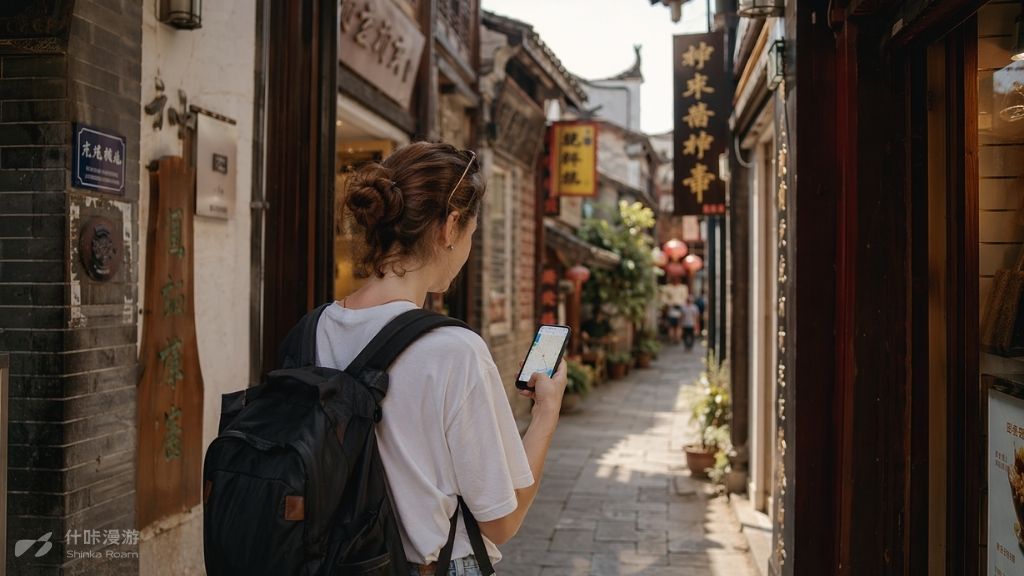
Which map to switch to
| Map app | Usability | English | Notes |
|---|---|---|---|
| Amap (Gaode Maps) | ⭐⭐⭐⭐⭐ | Multilingual UI | Accurate data; great traffic, metro-exit, and walking navigation. English version launched in 2025, later expanded to 14 languages. Available in overseas app stores. |
| Baidu Maps | ⭐⭐⭐⭐⭐ | English UI | Lots of restaurant reviews; some find its English experience a notch below Amap. |
| Apple Maps | ⭐⭐⭐⭐ | Native English | Uses Amap data; fine in big cities, thinner on transit details. |
| Google Maps | ⭐ | English | Stale and offset. Even when it opens, don't make it your primary navigation. |
Search "Amap" or "高德地图" in overseas app stores (official site amap.com). Full registration often wants a mainland phone number, but guest mode or linking WeChat/Alipay unlocks most features. Download offline packs for your destinations and favorite your hotel and target restaurants in advance — fewer searches after you land.
Translation: your lifeline for menus and conversations
Youdao Translator and Baidu Translate are good for photographing menus and road signs, and some features work offline; Tencent's Mr. Translator handles live two-way conversation; DeepL has the best text quality but needs your eSIM/roaming connection to open; in WeChat, long-press any message to translate — very handy with hotels and guides. Download the Chinese–English offline packs before departure so you have a fallback when the signal drops.
Five Chinese phrases that cover emergencies
| Chinese | Approx. pronunciation | When to use |
|---|---|---|
| 你好 | Nee-how | Greetings |
| 谢谢 | Shyeah-shyeah | Thanks |
| 多少钱? | Duo-shao chien? | Asking the price |
| 我不吃辣 | Wo boo chur la | Restaurants (genuinely used a lot) |
| 我不会说中文 | Wo boo hway shuo jong-wen | Asking people to slow down or try another way |
Walk into a local eatery with no picture menu, ride a subway with Chinese-only announcements, and hunt for restaurants with Google Maps — stack those together and hunger plus lost-ness arrive fast. Browsing photo menus on Dianping, or picking chains with English menus first, are the low-stress options. Before heading to smaller cities, memorize your destination's pinyin.
5. Hotels: a booking can still be refused
Before 2024, many small and mid-sized hotels turned foreign guests away citing "no qualification to host foreigners." In May of that year, the Ministry of Public Security, the Ministry of Commerce, and the National Immigration Administration made it explicit: hotels may not refuse foreign guests on those grounds. The policy is on paper; enforcement is still catching up — small-city front desks may genuinely not know, or fear making mistakes in the registration system, and still turn you away at the door.

| City tier | Foreign-guest acceptance | Risk |
|---|---|---|
| First tier (Beijing, Shanghai, Guangzhou, Shenzhen) | Most hotels accept foreigners; high-star hotels are essentially friction-free | Low |
| New first tier / provincial capitals | Chain hotels usually fine; some independents may still refuse | Medium |
| Third/fourth tier / county towns / scenic areas | Budget hotels and B&Bs often dodge with "we don't know the system" or "no qualification" | High |
Why refusals still happen
Hosting a foreign guest means reporting their stay to the police within 24 hours. Small-hotel front desks have never done it and fear fines for wrong entries; some staff really were fined for mistyping a passport number, so they'd rather avoid the hassle; language barriers add fear of complaints. So a gap remains between "policy allows it" and "the front desk is willing."
Arriving in a small town late at night and being refused, missing the fine print "mainland guests only" when booking online, hostels and B&Bs flat-out saying no foreigners — all of these happen, and the room fee isn't always fully refundable. When booking on Booking.com, Agoda, or Trip.com (Ctrip's international site), tick the option for properties that accept foreign passports; send a short email asking "Do you accept foreign passports for check-in?" Marriott, IHG, Hilton, Accor, Hyatt — plus their ibis and Holiday Inn brands — are usually the least trouble. In small cities, shortlist two or three backups. If you're genuinely refused, call 12345 and the local culture-and-tourism department will step in — the Chinese government portal has made clear that "no foreign-guest qualification" is not a valid reason to refuse.
6. Tibet: if you want to go, play by the rules
The scenery is real, and so are the restrictions. Foreigners face three hard gates entering Tibet, with essentially no "exception lane."

| Restriction | Requirement | Can you bypass it? |
|---|---|---|
| Tibet Travel Permit (TTP) | Individuals can't apply; a licensed local Tibetan travel agency must handle it | No |
| No independent travel | Guide + driver + agency-arranged accommodation; leaving the group on your own is not allowed | No |
| Itinerary must match the permit | The cities and routes on the permit define where you can go; no casual detours | Minor adjustments may be possible |
What to watch for when applying in 2026
Foreign passport holders, overseas Chinese without a Chinese ID card, and Taiwan compatriots with a Taiwan Compatriot Permit need one; Hong Kong and Macao residents with a Home Return Permit do not. Documents are usually a scan of your passport's photo page plus a valid visa page (visa-free countries: passport only). Standard routes like Lhasa, Nyingchi, and Shigatse take about 7–15 working days; Ngari, Everest, Bomi, and Shannan also need military-region approvals — allow 20+ days. Since March 13, 2026, flying or taking the train into Tibet requires the original permit — copies or scans won't do. Journalists and diplomats cannot use the ordinary travel-agency channel.
Checkpoints along the way verify permits. Without one you'll be turned back, and in serious cases it can affect the rest of your travels in China. Follow your agency's arrangements; don't wander off from the group.
Other sensitive areas
Some border and sensitive areas of Xinjiang carry extra restrictions for foreigners; don't approach or photograph military zones or restricted facilities; border areas like Everest Base Camp and Ngari may additionally require a "border defense permit" or an "alien travel permit." Plan Tibet at least a month ahead with a local agency; choose one experienced with foreign guests (e.g., Tibet branches of CTS, CITS, or CYTS). For multi-leg sensitive itineraries, consider placing Tibet in the middle-to-late part of your China trip — permits are often handed over by your guide at Lhasa's airport or station, and you can wait in gateway cities like Chengdu, Chongqing, Xi'an, or Xining. eSIM coverage is limited in remote areas; confirm with the operator in advance.
7. Medical care and insurance: you're outside the local system
Foreign tourists aren't covered by China's medical insurance — treatment is fully out of pocket. Public hospitals are still cheap compared with the US or Europe, but without insurance, an ER visit or hospitalization can gut your budget just the same. Language and rescue procedures often scare people more than the bills.
| Scenario | Rough cost | Language |
|---|---|---|
| Outpatient visit (cold, diarrhea) | RMB 100–500 (about $15–70) | International/VIP departments at big first-tier-city hospitals offer English; regular outpatient is basically Chinese-only |
| Emergency (fractures, acute illness) | RMB 1,000–10,000 (about $140–1,400) | ERs at top-tier (3A) hospitals may have English-speaking staff — no guarantee |
| Hospitalization / surgery | Tens of thousands to hundreds of thousands of RMB | International departments offer English, often at 3–5× the regular price |
| Ambulance | About RMB 100–300 per call (basic) | Paramedics usually speak Chinese only |
Clauses worth watching in your insurance
Aim for medical coverage of at least RMB 300,000 (about $40,000); emergency medical evacuation/repatriation should be included; a 24-hour multilingual assistance hotline; direct billing is better — less fronting of cash; confirm the policy accepts passport holders. Credit-card-bundled insurance often caps at a few thousand dollars — one ER visit can drain it. Don't keep the assistance number only in Gmail — you can't open it without internet. Small clinics are cheap, but quality and insurer recognition are question marks; prioritize 3A hospitals. Bring a small stash of common meds (anti-diarrheal, fever reducers, antihistamines, band-aids) — pharmacies are everywhere, but buying the wrong thing happens.
Products with a China medical network (Allianz, AIG, Zurich, AXA, etc.) are relatively worry-free. International clinics like United Family and Oasis in first-tier cities are fully English-speaking but pricey — suited to premium insurance or deep pockets. The 3A hospitals — Peking Union, Shanghai Ruijin, Guangzhou's First Affiliated Hospital of Sun Yat-sen University — are where capability is most assured.
8. The small stuff you only notice after landing
Visa, payments, connectivity sorted — the details can still catch you off guard. Not to scare you; just so you know what's coming.
| Thing | What it's like | How to handle it |
|---|---|---|
| Public toilets | Some are squat toilets, no paper, no soap | Carry tissues and hand sanitizer; map apps show toilet ratings |
| Secondhand smoke | Indoor smoking bans are enforced unevenly by city | Choose non-smoking floors; aim for non-smoking sections in restaurants |
| Food | No English menus, often oily and spicy, occasional surprise ingredients | Learn to say "no spicy"; browse photos on Dianping; chains are the safe option |
| Queuing | Sometimes rather "flexible" | Stay patient; don't force Western norms onto it |
| Crossing the street | E-bikes are quiet but fast | Use crosswalks; don't assume vehicles will yield |
| Tipping | No tipping culture | Don't tip — it may just confuse people |
| Photography | Military, government, and some bridges/ports are off-limits | See a warning sign or a sentry? Put the camera away |
| Bargaining | Tourist stalls and non-chain shops are negotiable; malls and supermarkets are fixed-price | Try opening at 50–70% of the asking price |
Drones: stricter in 2026
From January 1, 2026, the revised Public Security Administration Punishments Law writes unauthorized drone flights ("black flights") into the penalty provisions. Drones over 250 g must be registered under your real name on the CAAC's UOM platform; serious cases can mean 5–10 days of detention, and illegally crossing a national border can mean 10–15 days. Foreigners need a Chinese ID card for real-name registration — extremely cumbersome, with real legal risk. In January 2026, tourists in Beijing, Shanghai, and elsewhere were already detained for five days with equipment confiscated for black flights. At places like the Forbidden City, the Great Wall, or the Bund, getting stopped by security is nearly guaranteed.
Unless you're a professional crew with registration and airspace approval done, leaving the drone at home saves you the trouble.
The rest is mindset: many things won't run the way you're used to. Keep clear of politics and sensitive topics in public; WeChat mini programs handle food ordering, ticketing, and shared bikes — learn one entry point and you can skip installing a pile of apps.
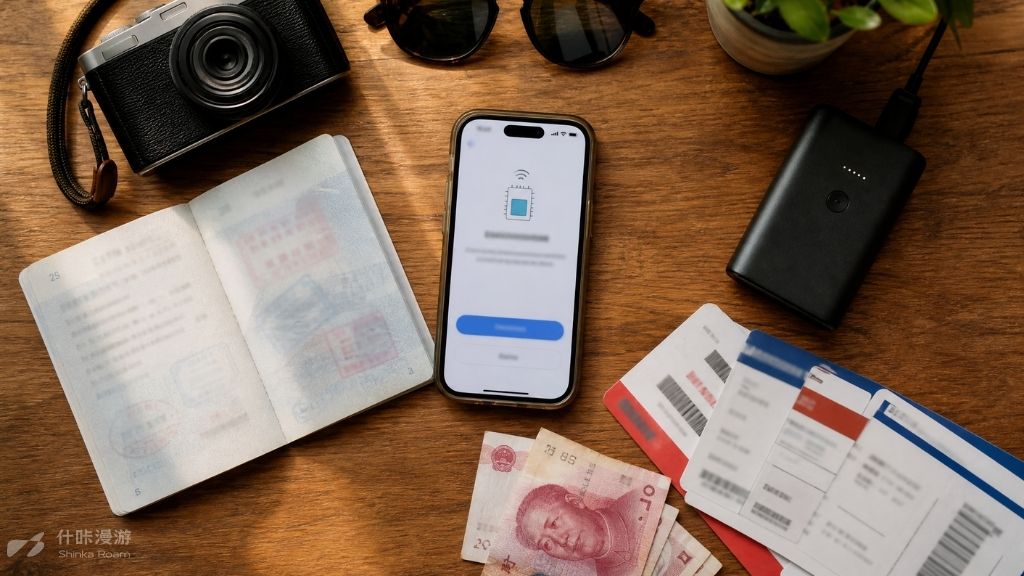
A pre-departure checklist to tick off
No need to mythologize this list — but miss the items below and your trip genuinely can go sideways. Screenshot it or print it.
| Item | Priority | Done |
|---|---|---|
| Passport valid 6+ months | Must | ☐ |
| Confirm you're on the visa-free / transit visa-free list (NIA) | Must | ☐ |
| Register international Alipay / WeChat and link an international card | Must | ☐ |
| Buy and install a mainland China travel eSIM (ShinkaRoam) | Must | ☐ |
| Download Amap, switch to English, grab offline packs | Recommended | ☐ |
| Travel insurance with medical coverage ≥ RMB 300,000 / ~$40k | Recommended | ☐ |
| Confirm hotels accept foreign guests (Booking / Trip.com) | Recommended | ☐ |
| Screenshot/print passport, flights, hotels, insurance, emergency contacts | Recommended | ☐ |
| Insurer's 24h assistance number (screenshot + paper) | Recommended | ☐ |
| Offline Chinese–English packs in your translation app | Recommended | ☐ |
| Tibet: apply for the permit ~1 month ahead | If needed | ☐ |
| Confirm your phone supports eSIM (iOS check guide) | If needed | ☐ |
| A few basic Chinese phrases / a phrase card | Optional | ☐ |
| No drone without approval | Optional | ☐ |
In 2026, China really is somewhat easier for foreign visitors to enter, pay in, and get around than a few years ago. But it still runs on its own logic: more QR codes than card swipes, more apps than websites, super-apps bundling dozens of little chores. Understanding that beats memorizing a pile of "amazing" adjectives.
Policies change, and so do platform rules. Before departure, re-verify through official channels like the National Immigration Administration and the Consular Service Network; for connectivity, treat the live plans on the ShinkaRoam mainland China eSIM page as the source of truth — safer than taking any guide, including this one, as gospel.
Frequently asked questions (FAQ)
These are the questions foreign travelers most often ask when searching "China travel 2026," "China visa-free," or "China eSIM" — answers kept short and checkable.
Do foreigners still need a visa for China in 2026?
Depends on your nationality. Around 50 countries get unilateral visa-free entry (usually a 30-day stay), another 55 can use the 240-hour visa-free transit, and some countries have full mutual exemption with China. Lists shift — check the National Immigration Administration or the China Consular Service Network before departure.
How do foreigners use Alipay and WeChat Pay in China?
Download the international Alipay / WeChat, verify with your passport, and link an international card like Visa or Mastercard — no Chinese bank card needed. Single transactions up to RMB 200 are usually fee-free; above that, a ~3% fee may apply. Details: Alipay International and WeChat Pay.
How do I get online in China so Google and WhatsApp work?
Local Chinese SIM traffic is subject to network restrictions — Google and WhatsApp usually won't open. The more reliable route is installing a travel eSIM before departure (data exits overseas), such as the ShinkaRoam mainland China eSIM. After landing, keep hotel WiFi off and run on eSIM data the whole way. If you need ChatGPT, pick the "non-HK IP" version.
Is the ShinkaRoam China eSIM expensive? How do I buy it?
Plans start around $2.8, activate by QR code in about a minute — no shipping, no card swapping. Choose your data and days on the mainland China eSIM purchase page, or enter via the ShinkaRoam official site. Not sure your phone supports eSIM? Check the iOS eSIM compatibility guide first.
Can foreigners really be refused at hotel check-in?
First-tier cities are mostly fine; third/fourth-tier cities and B&Bs still occasionally refuse. When booking on Booking / Agoda / Trip.com, filter for properties that accept foreign guests and confirm by email. Policy forbids refusing on "no qualification" grounds — if you hit a wall, call 12345.
References
- National Immigration Administration — Press conference on Q1 2026 immigration management data and results (April 10, 2026)
https://www.nia.gov.cn/n741435/n1194535/n1778517/index.html - Beijing Municipal People's Government — March 2026 foreign-arrival data and visa-free policy briefing
https://www.beijing.gov.cn/gongkai/shuju/sjjd/202603/t20260315_4557293.html - Caixin — China comprehensively relaxes and optimizes its transit visa-free policy (December 17, 2024)
https://www.caixin.com/2024-12-17/102268944.html - CCTV — Alipay rolls out translation in 16 languages (August 21, 2024)
https://jingji.cctv.com/2024/08/21/ARTIbY8wFWmpibl1cWQMx8vC240821.shtml - Xinhua — Foreign-card acceptance coverage at key Beijing merchants exceeds 98% (May 2024)
http://www.news.cn/money/20240523/1424e0f2ebe748dc969929a112f23abf/c.html - 21st Century Business Herald — Foreign-card acceptance rate at key Shenzhen merchants at 96% (June 2024)
https://news.10jqka.com.cn/20240624/c659137208.shtml
Information current as of July 2026, for reference only — not legal or travel advice. eSIM examples come from ShinkaRoam, a travel eSIM brand offering connectivity in 200+ countries and regions.
Mainland China plans: https://www.shinkaroam.com/en-us/esim/usd/list/cn-1.html
Further reading: What is eSIM · Simplifying international roaming with eSIM · Check if your iPhone supports eSIM


0 comments